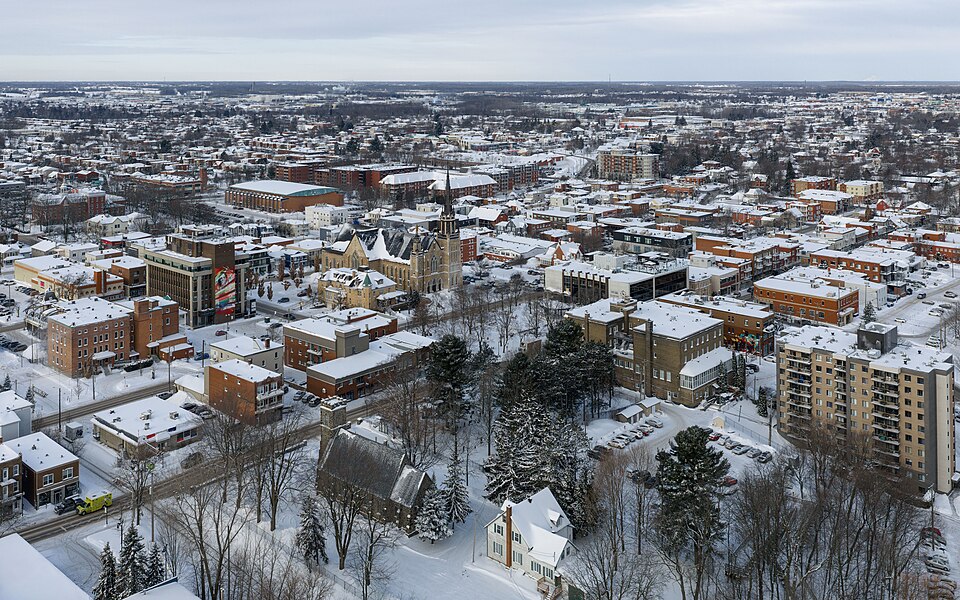
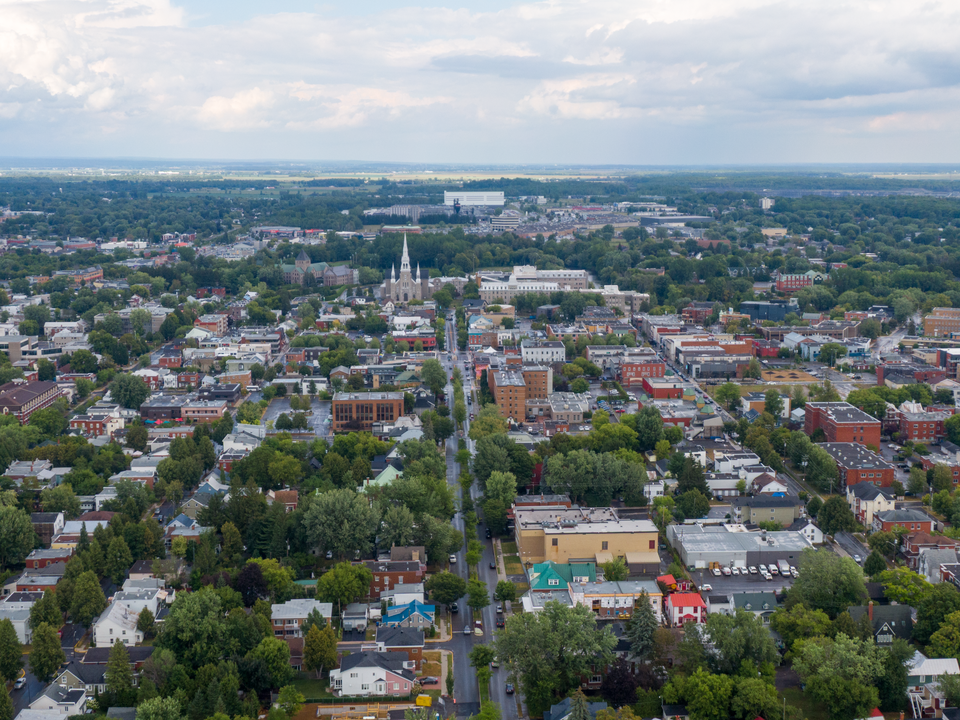
Granby sits at City Score rank #265 with a standing of 44%, from 5 of 8 open-data pillars (tax, construction, connectivity, indoor air, water, seismic hazard, growth, safety). Missing pillars score at median standing so thin coverage cannot inflate the rank. The chart below shows how that standing moves year to year.
Latest owned placements: indoor radon rank #7 of 327 at 238 Bq/m³ survey mean. Full tables and method notes live on each study edition; atlas readings for the same slug open from the topic buttons.
In the 2025 City Score edition, Granby carries a City Score standing of 44% (rank #265 of 343) with 5 of 8 pillars observed. That sits 3 points below the Quebec peer average across 34 ranked cities. Within Quebec, Granby ranks #22 of 34 on City Score.
The strongest signal in the current chart is broadband download (ISED seed tier) (standing 79%, rank #74 of 343, raw score 953). The weakest observed pillar is indoor radon (standing 2%, rank #7 of 327).
Drinking-water hardness on the water atlas reads 200 mg/L as CaCO₃ for Granby. Compare that figure to the hardness pillar on the chart and to the national hardness guide on the hub.